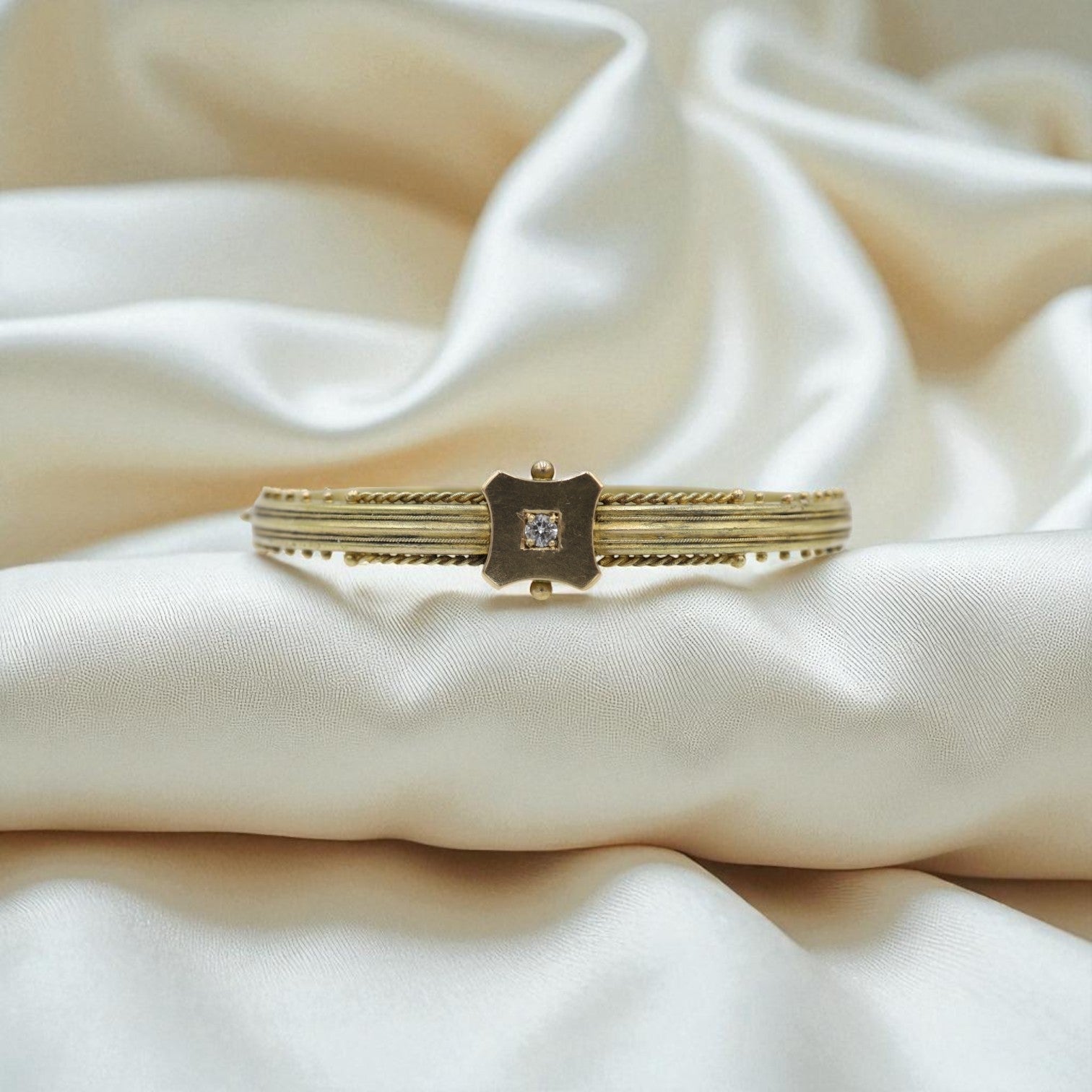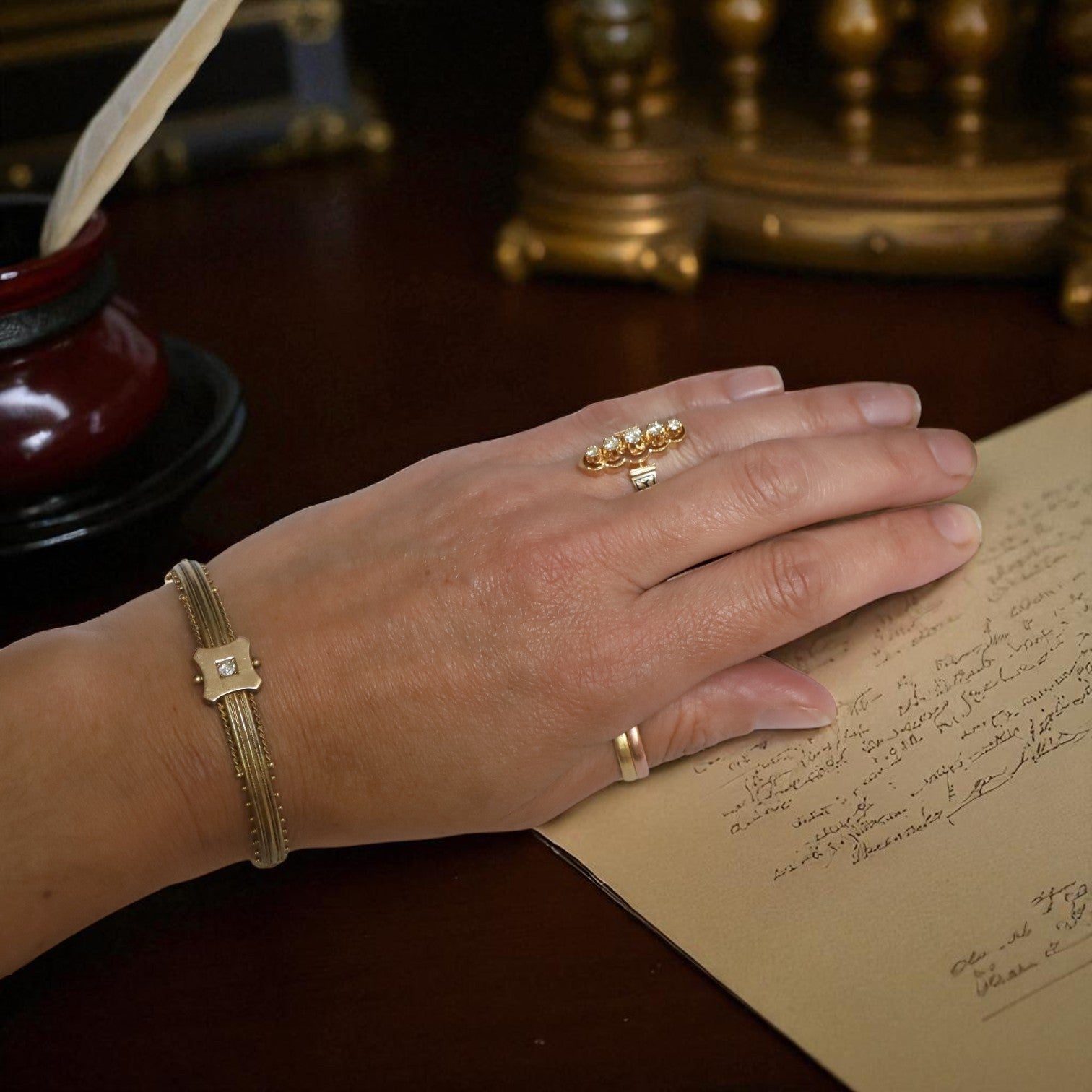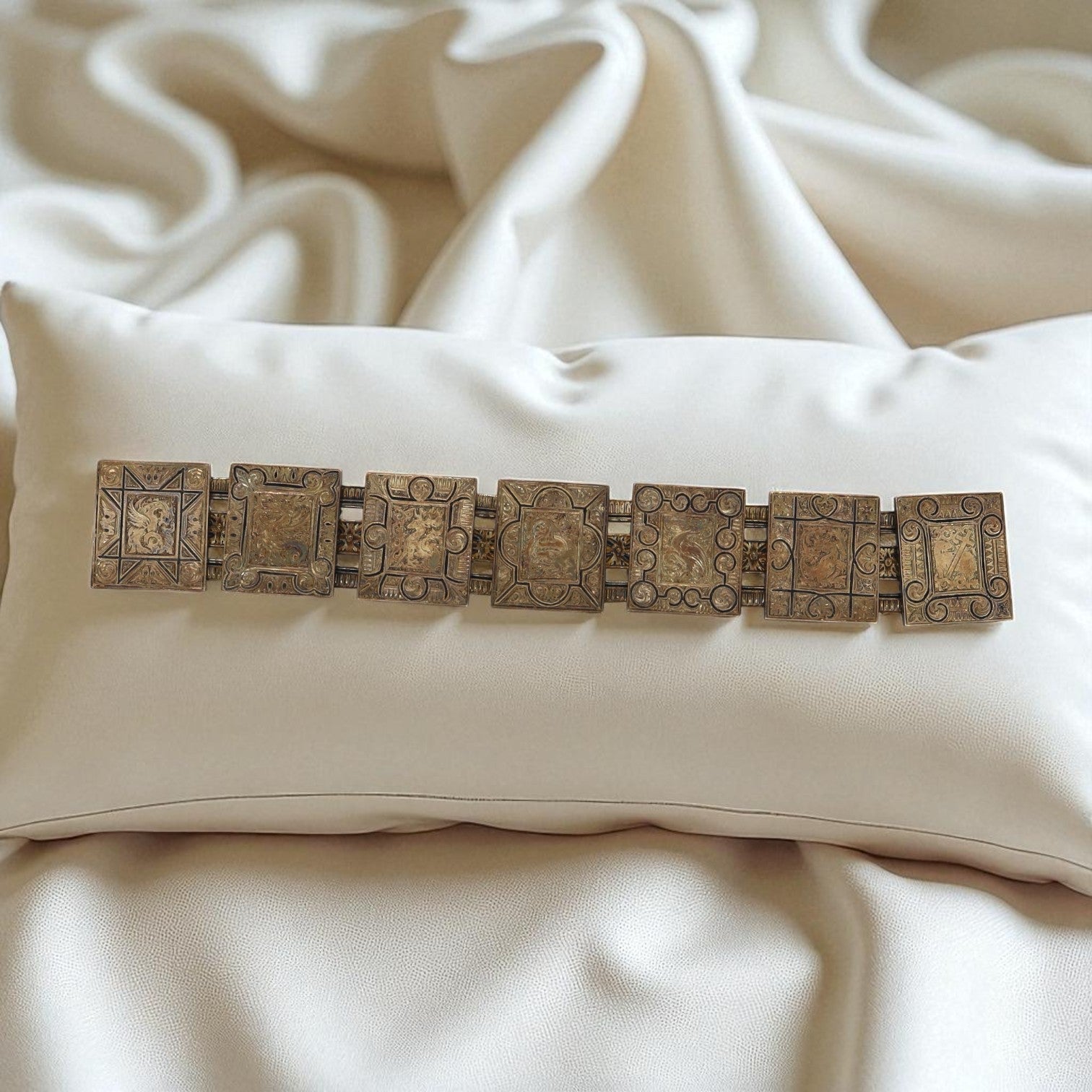
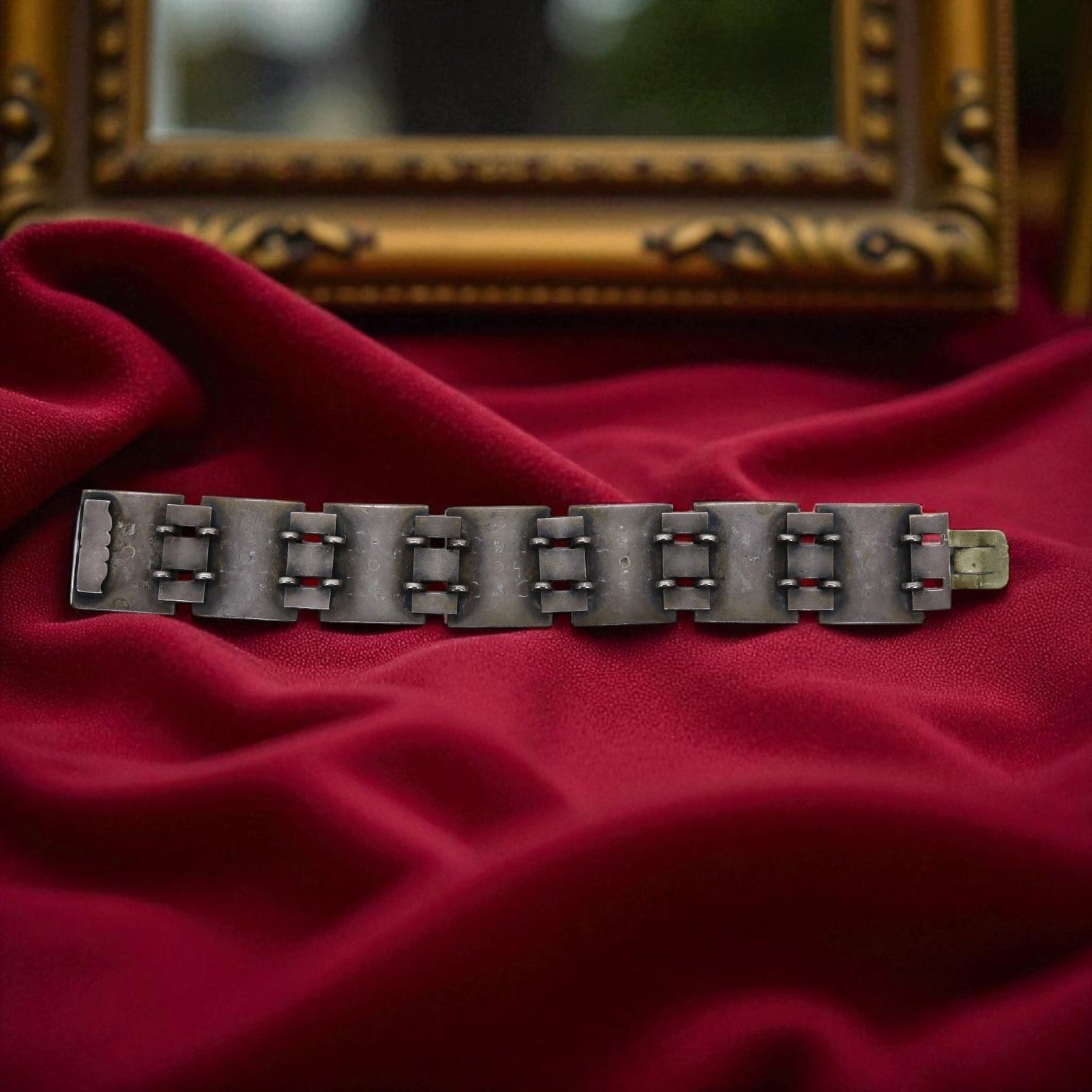
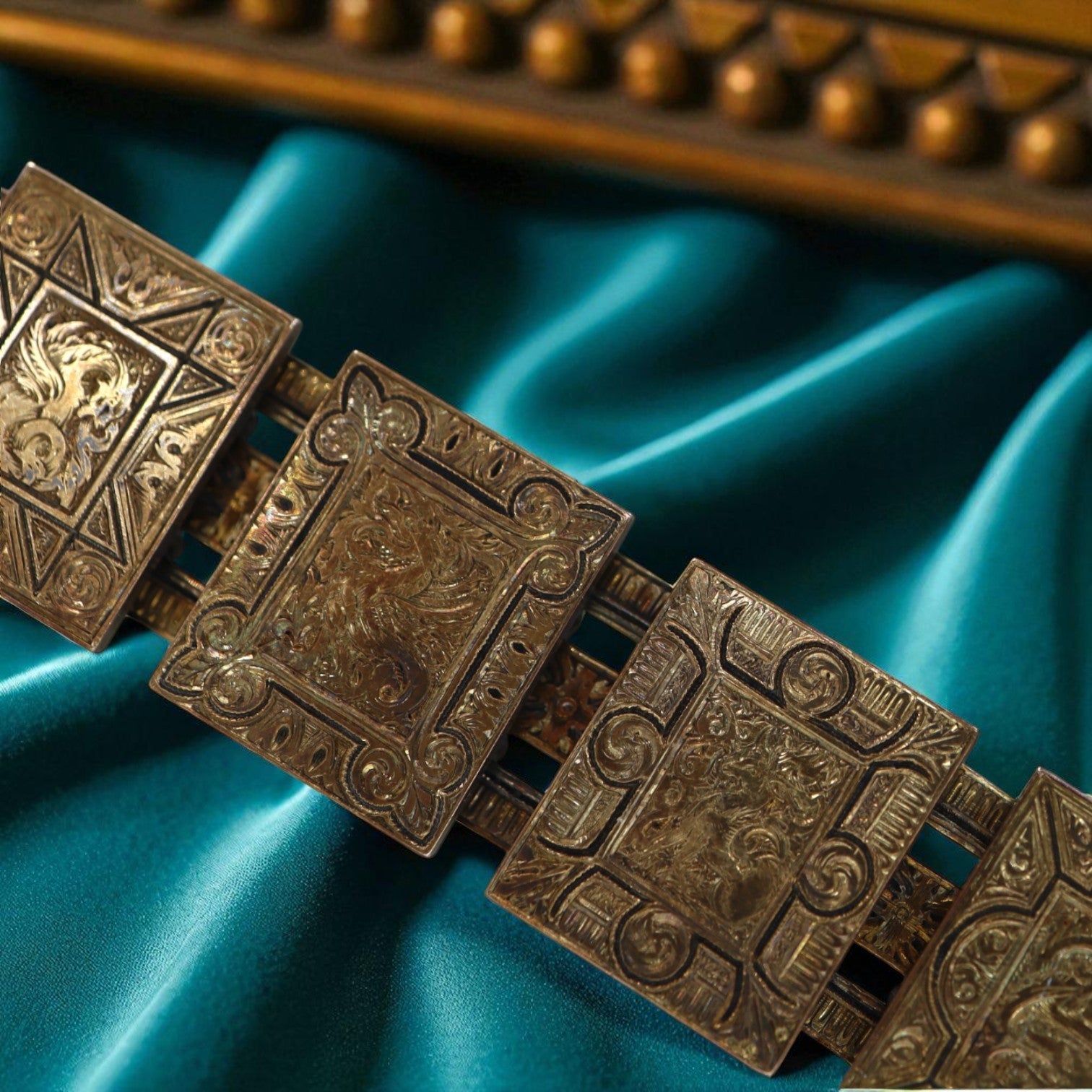
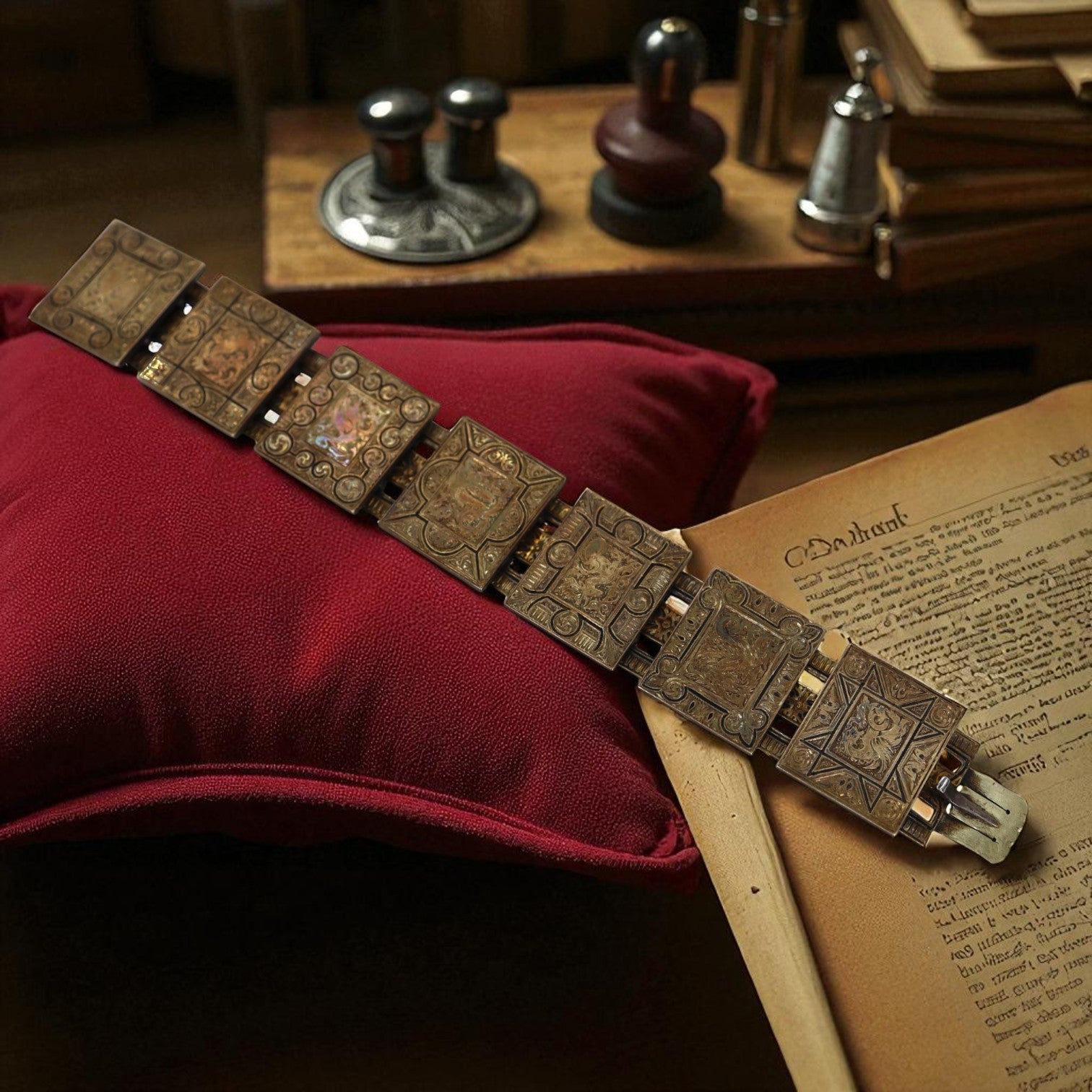
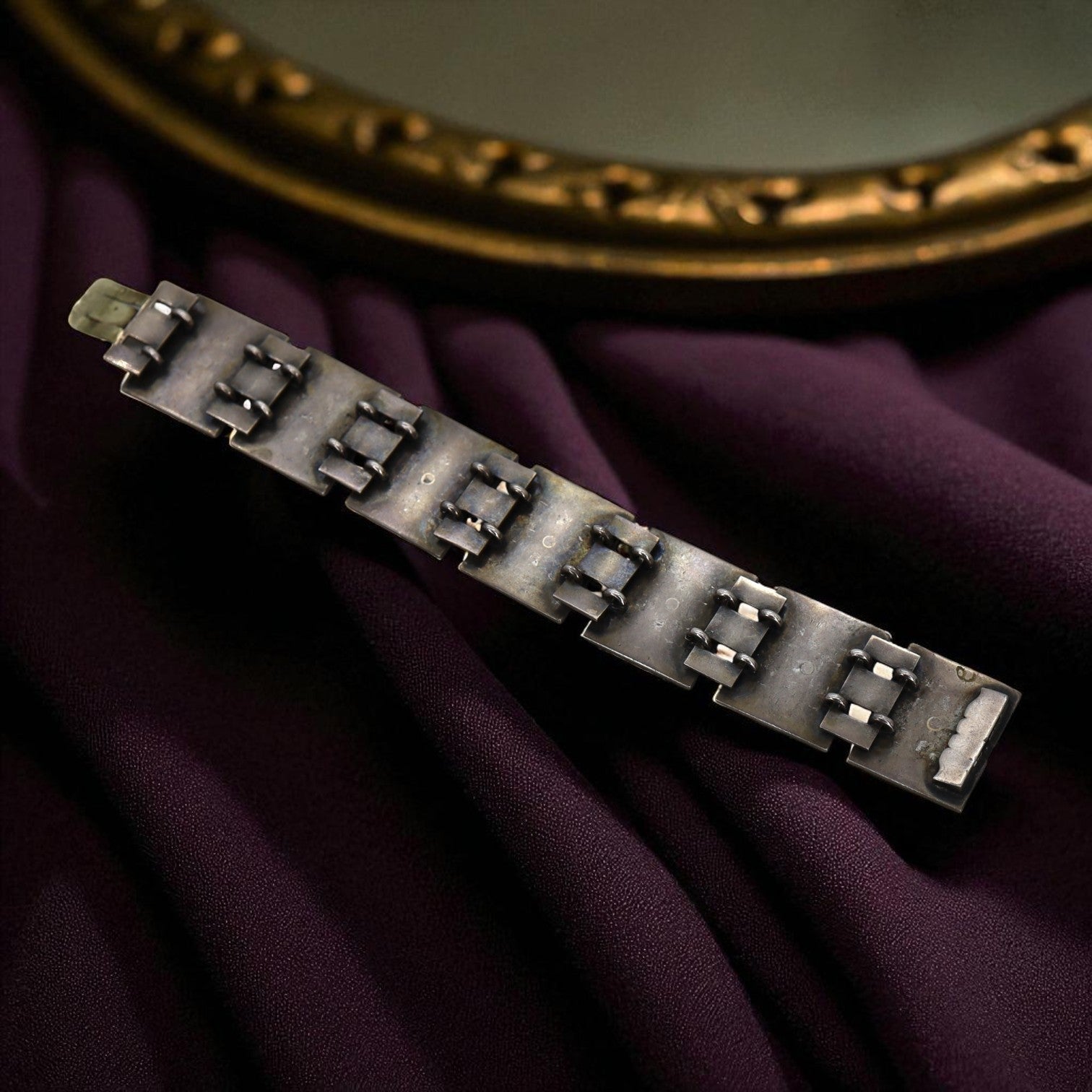
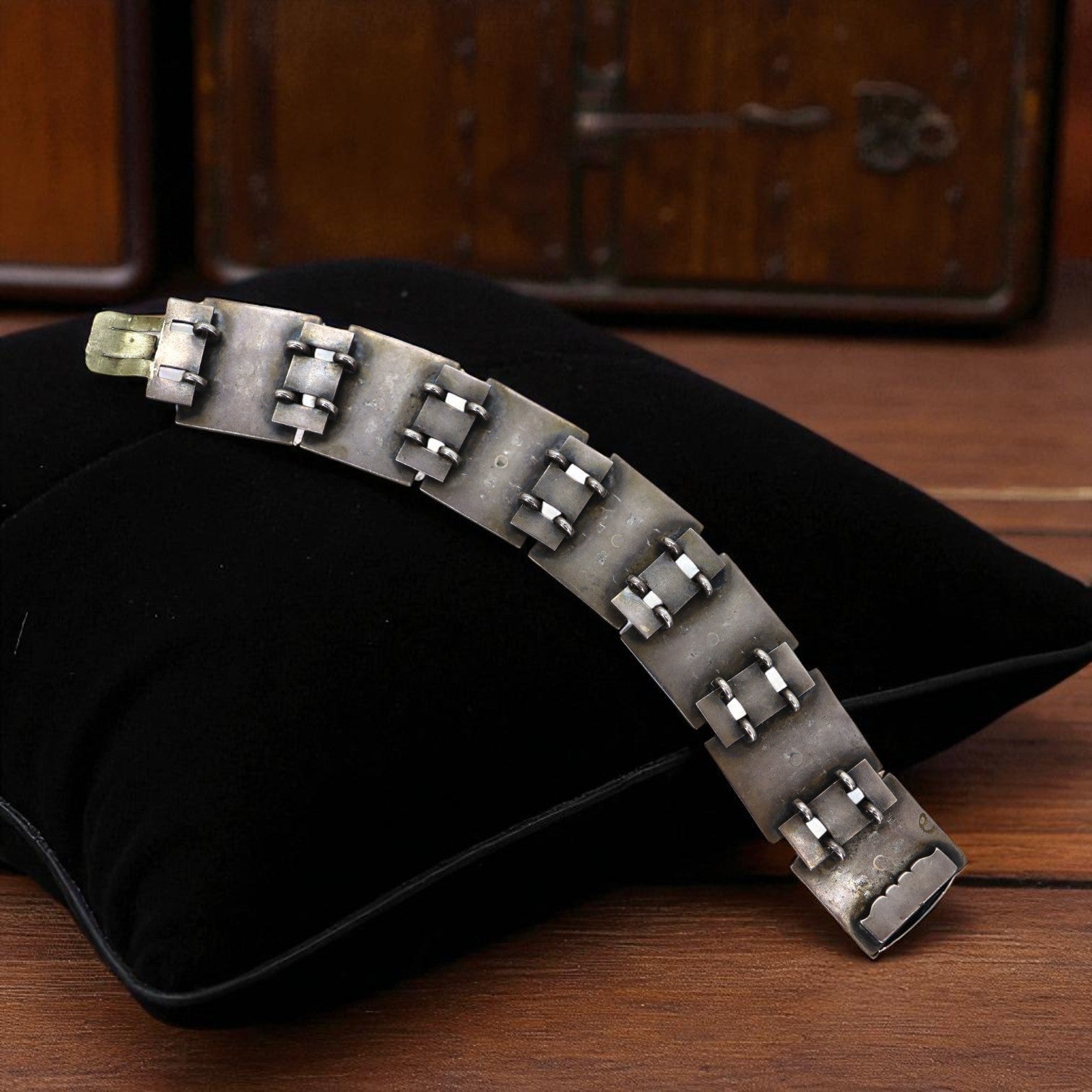
Vintage Peruvian Panel Bracelet
South American jewelry
-
Dimensions: 2" wide / each panel is 2" x 1.5"
Metal: Silver
Markings: 900 Makers Mark
Period: circa 1950-80
Weight: 73.2 grams
Key Characteristics of Vintage Peruvian Silver Jewelry (General):
-
Silver Content: While "silver" is often stated, the actual silver content can vary. Look for hallmarks or stamps, even if they're partial. Vintage pieces are commonly .900 silver (90% silver), but lower grades (even .800) are possible, especially if produced for the tourist trade. Pieces made for local use, or pre-20th century, might be higher purity. If unmarked, professional testing is recommended.
-
Motifs: Common motifs reflect Peruvian culture, history, and natural environment. Key motifs relevant to your bracelet include:
- Llamas: A vital animal to the Andean people for transportation, wool, and meat. Lamas are often depicted as strong, hardy, and essential to survival.
- Andean Landscapes: Mountains (especially the Andes), the sun, and stylized plants are very typical. The Andes Mountains are a central part of Peruvian identity and spirituality.
- Inca Symbols: While your description doesn't explicitly mention them, be aware of potential Inca influences. Look for the Inti (sun god), Chakana (Andean cross), and geometric patterns reminiscent of Inca textiles.
- Indigenous People: Sometimes, figures of people in traditional dress are depicted.
-
Style/Techniques:
- Repoussé: This is a common technique where the silver is hammered from the back to create a raised design on the front. Your panel description suggests this. Look for fine details and depth in the relief.
- Applied Decoration: Sometimes, small silver elements are soldered onto the base piece.
- Engraving: Fine lines etched into the silver.
- Niello: (Less common, but possible) A black metallic alloy (usually containing silver, copper, lead, and sulfur) is used to fill engraved designs, creating contrast.
- Filigree: (Less common, but possible) Delicate, intricate designs made with fine silver wires.
- Chasing: Using tools to push the silver from the front to refine the repoussé design and add detail.
-
Construction: Look at the way the bracelet is put together. Are the links soldered together neatly? Is the clasp sturdy and appropriate for the piece? Handmade pieces will likely have slight imperfections, which are desirable and indicative of age.
-
Hallmarks/Maker's Marks: Peruvian silver hallmarks are not as standardized as those in some other countries. You may find:
- ".900" or other silver purity marks.
- Initials or symbols of the maker or workshop. Identifying these can be difficult unless the maker is well-known.
- Marks indicating the city of origin (e.g., "Peru" with a stylized "P").
- Sometimes, only a partial or worn mark is present.
Dating:
Dating can be tricky. Here's a rough guide:
- Early 20th Century (1900-1950): Often made with higher silver content (.900). Motifs might be more stylized and less detailed than later pieces. May have older style clasps (e.g., hook and eye). Repousse and hand worked techniques were common.
- Mid-20th Century (1950-1980): Continued production with a wide range of styles, including pieces made specifically for tourists. Silver content might vary more. More modern clasp styles may be present.
- Late 20th Century (1980s-Present): Often mass-produced, with a focus on tourist appeal. Silver content might be lower. Clasps are often simple and functional.
Special Orders Take 6 Weeks
Επιλέξτε χαρακτηριστικά
Wear it with
Wear it with
Wear it with
Wear it with